Global Labour Institute

  • About Us
    • Our Team
    • Contact Us
    • The Global Labour Institute Network
    • Key Partners
  • Publications
  • Issues
    • Informal Work
    • Gender and Equalities
    • Climate Crisis
  • Trade Union Education
    • GLI International Summer School
      • International Summer School 2016
      • International Summer School 2015
      • International Summer School 2014
      • International Summer School 2013
      • International Summer School 2012
  • The GLI History Project
  • Latest
  • StreetNet International & GLI collaborate on Barometer Project

    StreetNet International & GLI collaborate on Barometer Project

    Informal street vendors and market traders make huge economic and social contributions, but many workers major challenges at work, including insecurity, long working hours, poor working environments, violence and harassment, lack of affordable finance and low levels of representation.

    In 2024, StreetNet International (SNI) – a global alliance of organisations of street vendors and informal economy workers – partnered with the Global Labour Institute (GLI) in Manchester to launch the ‘Barometer Project’ with the aim of understanding in greater detail the situation facing affiliated members and workers. Through the collection of data through surveys, focus groups and in-depth interviews, the project was launched with several objectives including:

    • Gaining a detailed understanding of the characteristics, livelihoods and key issues faced by street vendors and market traders.
    • Informing SNI on key thematic areas for exploration, particularly related to opportunities for the formalisation of informal employment (improved livelihoods & working conditions, protection from harassment & violence, freedom of association, the right to work without restrictions, access to social protection, a& recognition, engagement in collective bargaining & consultation with authorities).
    • Building the capacity of SNI affiliates to monitor workers’ conditions and collect evidence to support engagement with national and international authorities and policymakers. 

    The project was based on a participatory research methodology – through the active engagement of trade unions and membership-based associations organising and representing workers in the informal economy and built on vendors’ and traders’ own experiences and knowledge. SNI affiliates were actively involved in the research process – two cities were chosen for piloting the project – Harare, Zimbabwe, working with Zimbabwe Chamber of Informal Economy Associations (ZCIEA) and Buenos Aires, Argentina, working with the Union de Trabajadores de la Economia Popular (UTEP). 

    The project findings were also used to support SNI’s participation in the 2025 International Labour Conference (ILC) general discussion on promoting transitions towards formality, during which SNI advocated for an inclusive and rights-based formalization.

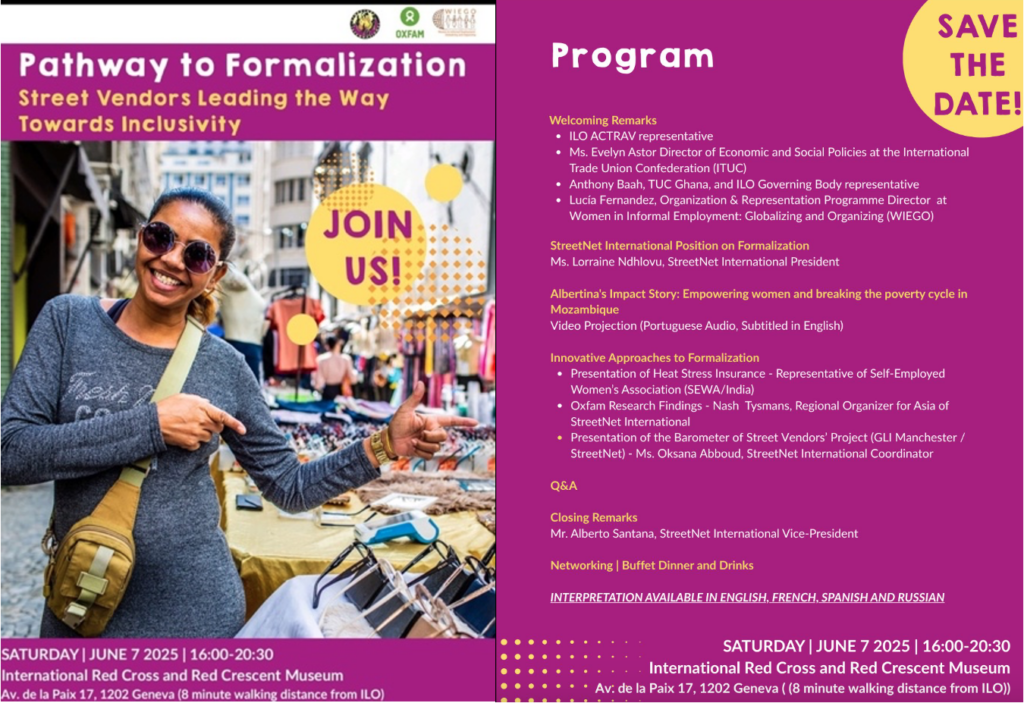
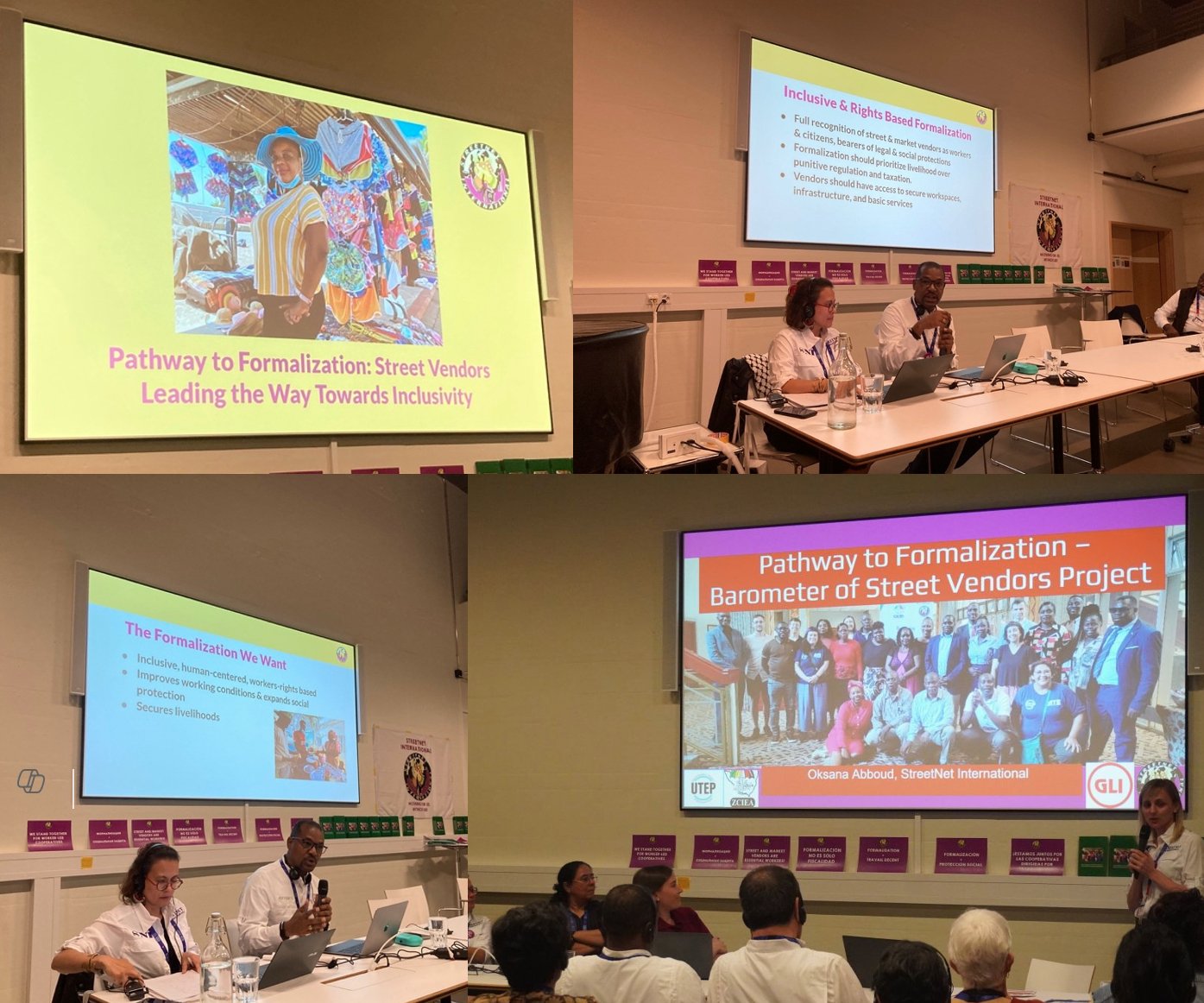
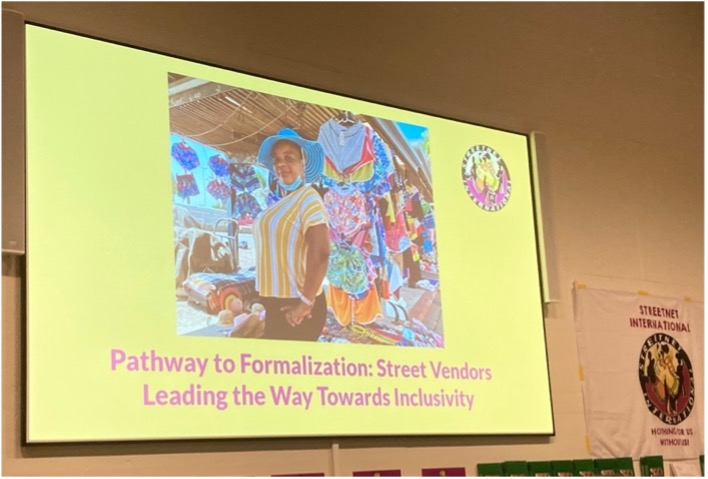
    On 7 June, SNI also hosted a side event to the ILC: ‘Pathway to Formalization: Street Vendors Leading the Way Towards Inclusivity’ 

    During the event, SNI laid out its vision for formalization – rooted in workers’ rights, dignity and the principles of the social and solidarity economy. It also provided the opportunity to share best practice and innovative research, including the key findings from the Barometer project.

    [Image: SNI Formalisation Presentation Slide]
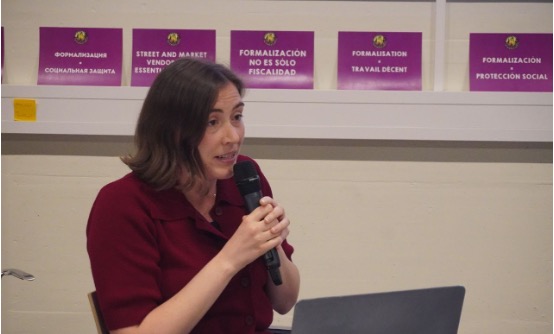
    Early findings from the project were presented by Oksana Abboud (SNI International Coordinator) and Georgia Montague-Nelson (GLI Executive Director). Georgia praised the role of ZCIEA and UTEP in shaping the research programme, highlighting huge potential for replicating the methodology across other countries.

    She also emphasised the value of a participatory approach and for workers and representative organisations to shape and lead worker-focused research. Too often, workers in the informal economy are excluded and ignored, but have valuable knowledge, experience and proposals and can lead the way in transforming their livelihoods and economies – “Nothing for us, without us”!

    [Image: Georgia speaking at the SNI event]

    The full country reports, and a cross-comparative report from the Barometer Project will be launched in the coming months.

    Georgia

    June 30, 2025
    Homepage Post 3, Informal Work, Latest
  • Global Labour Institute at VREF Global Summit

    Global Labour Institute at VREF Global Summit

    Public transport – formal and informal – is a vital service relied upon by millions of people all over the world, strategically important in the economic and social life of cities and central to cutting transport emissions. The sector is also a major employer globally, creating millions of direct and indirect jobs. Across many African cities, public transport reform projects are underway which have significant impacts on informal transport, which many people rely on for their livelihoods. 

    Building on the Global Labour Institute’s (GLI) programme of work focused on the informal transport economy, on 26-28 May, the Global Labour Institute (GLI) attended the Volvo Research and Educational Foundations (VREF) Global Summit, held in Gothenburg, Sweden. The Global Summit brought together 150 people from 30 countries across 3 days to exchange knowledge, ideas and perspectives from research programmes on transport, which included discussion as part of VREF’s programme on ‘Informal and Shared Mobility in Low- and Middle- Income Countries (ISM).’ 

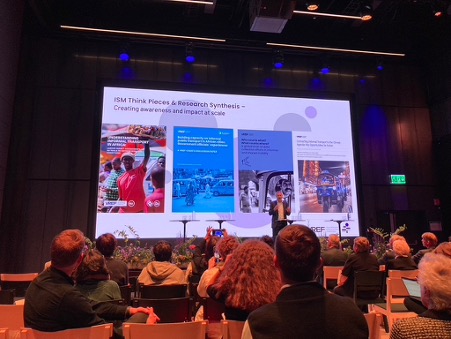
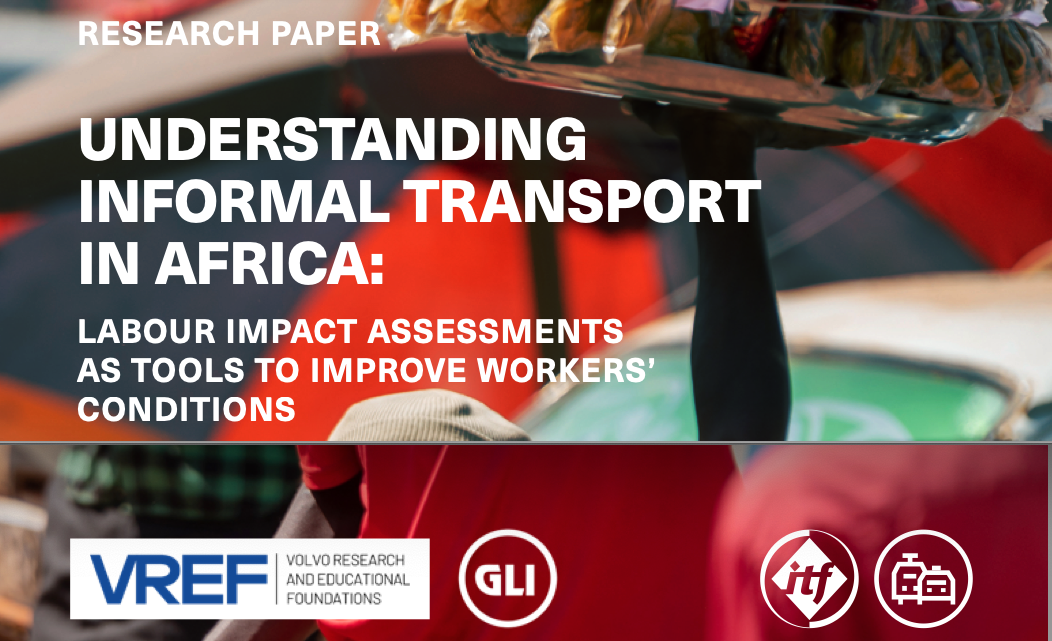
    As part of a breakout session at the Global Summit titled ‘Workers conditions in informal and shared mobility’, Georgia Montague-Nelson (GLI Executive Director) and Alana Dave (International Transportworkers’ Federation (ITF) Urban Transport Director) had the opportunity to co-present our new report: ‘Understanding Informal Transport in Africa: Labour Impact Assessments as Tools to Improve Workers’ Conditions.’ GLI was commissioned by VREF and the ITF to write the research report exploring the potential of labour impact assessments as a means to enhance workers’ conditions in Africa’s informal transport sector, and provides an in-depth conceptual framework to address policy and practical opportunities and challenges. 

    [Image: Georgia & Alana at Global Summit. Credits: VREF]

    Informal transport workers are frequently overlooked when considering the impact of transport reforms on employment and the economy, and rarely included in consultations undertaken by transport authorities. Overcoming structural problems and inequalities requires policies which address the inter-relationship between passenger services and working conditions for the millions of workers who rely on this sector for their livelihoods. Key recommendations and findings from the research paper which were highlighted during the breakout session included:

    • Building trust and confidence to achieve reform that is inclusive of and supported by workers requires consultation and negotiation at the early stages of planning and development of projects, with agreed terms of reference and procedures.
    • Capacity-development for constituent organisations to enable workers and informal employers (owners) to provide education and information to their members, democratically represent their interests, engage in policy development and fully participate in negotiations with transport authorities. 
    • Addressing the immediate concerns of the workforce, including alternatives to the target system, gender discrimination, access to vocational training, harassment and corruption, working conditions, access to affordable capital, and access to social protection 
    • Improving the labour impact assessment methodology by developing a standardised set of research tools and a common framework for data analysis and more detailed evaluation of methodology together with research specialists and other key stakeholders.
    • Mainstreaming the methodology for inclusion in procedures and policies when considering proposals for major public transport projects, which could also include a programme of training for unions, associations, researchers and transport authorities in countries where major transport reform is planned.

    For more information about the paper click here. This paper was also presented and discussed at an online VREF Research Forum. Click here to watch the recording of the forum.

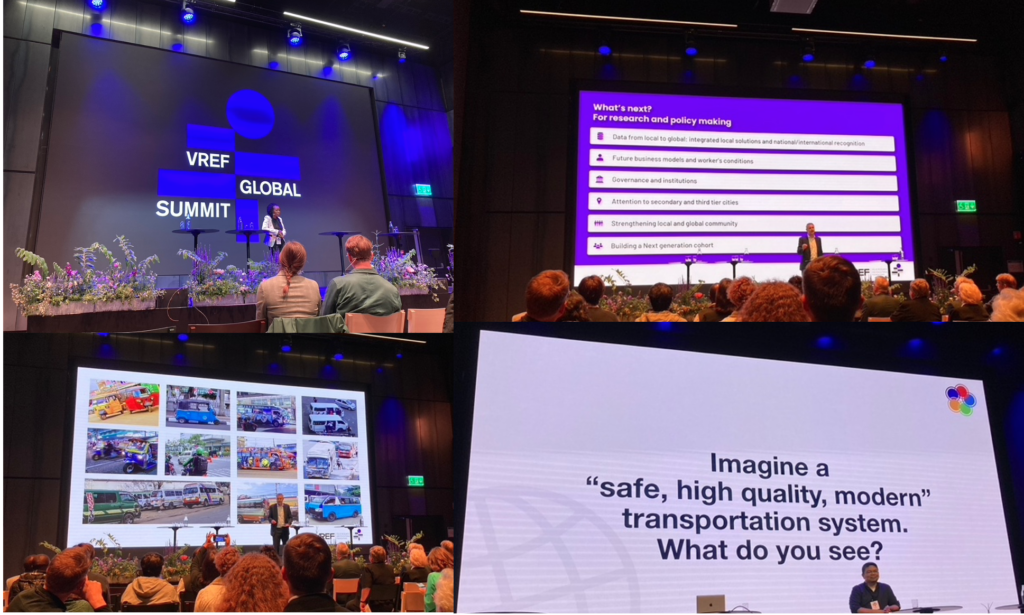
    During the Global Summit, breakout sessions explored a range of different areas of research; including transport accessibility and security, gender equity and transport justice in urban mobility, access and planning; and decolonizing the language of and research about transportation.

    Plenary sessions also explored ambitions to build future research programmes on mobility and transport in the coming decade, particularly important given the centrality of transforming informal transport to the overall sustainable transport agenda.

    [Image: Plenary Session on ISM, Global Summit]

    Georgia

    June 24, 2025
    Article, Homepage Post 3, Informal Work, Latest
  • Technological Changes at Airports and the Impact on Workers

    Technological Changes at Airports and the Impact on Workers

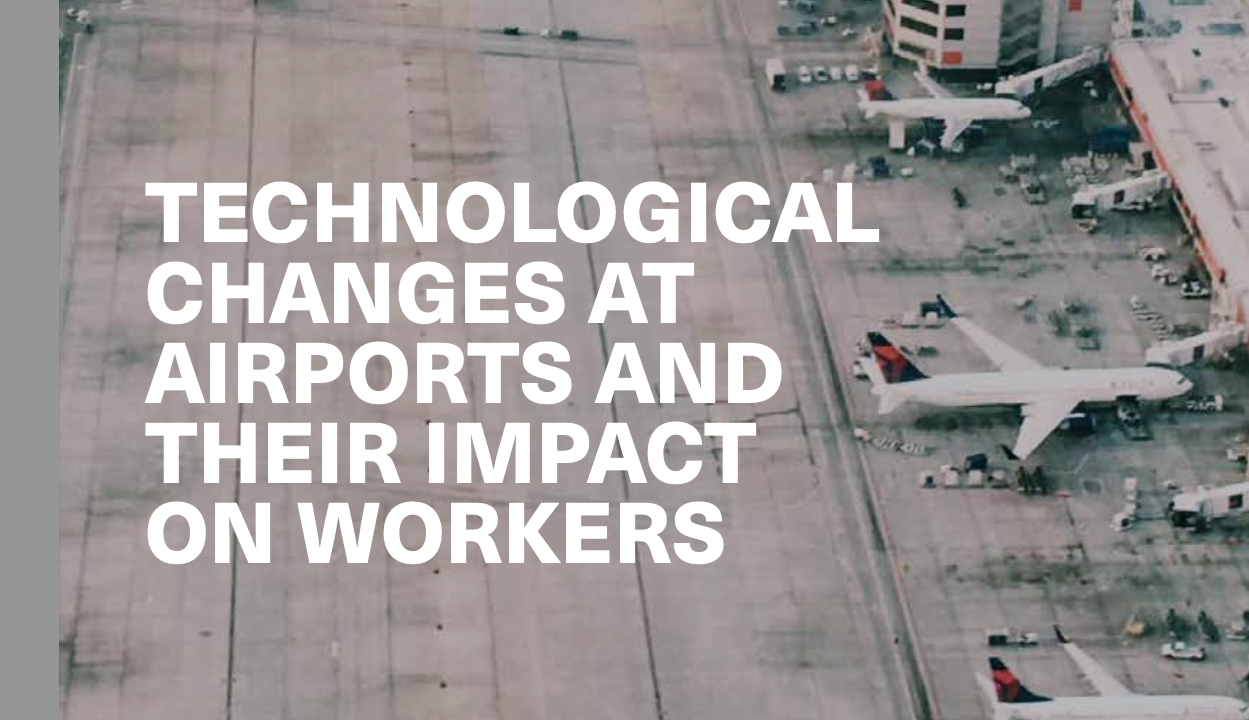
    Across the world airports are introducing new technologies aimed at increasing efficiency, reducing costs and supplementing worker shortages. The rate of change varies across airports – dependent on passenger numbers, airport size, regulatory pressures and the stakeholders involved. 

    Through in-depth interviews and focus group discussions at three airports and an online questionnaire survey to union representatives, this research set out to explore how technological change within airports is impacting workers’ rights and jobs.

    There is huge potential for these technologies to ease workload and improve occupational health and safety. However, technology tends to be mistakenly seen as a silver bullet and introduced without consideration of the potential negative impacts of technology.

    he existing challenges highlight the central importance of a collaborative approach to the introduction of new technology, including all key stakeholders within airports – particularly trade unions.

    It also highlights the importance of labour impact assessments, including equality impact and risk assessments before technology is introduced, commitments to job security, quality and skills development, equal access to quality technology for workers, standardisation across technology and the need for controls on monitoring and surveillance technologies and the collection and use of worker data.

    This research was commissioned from GLI by the International Transportworkers Federation (ITF)

    Click here to read this research report.

    Georgia

    January 20, 2025
    Homepage Post 3
  • GLU Conference And Alumni Workshop

    GLU Conference And Alumni Workshop

    Conference 2024

    Global Labour University (GLU) organises yearly conferences on topics of common interest in the network. The conferences rotate among GLU campuses, and allow network members to present research, share ideas, and strengthen connections.

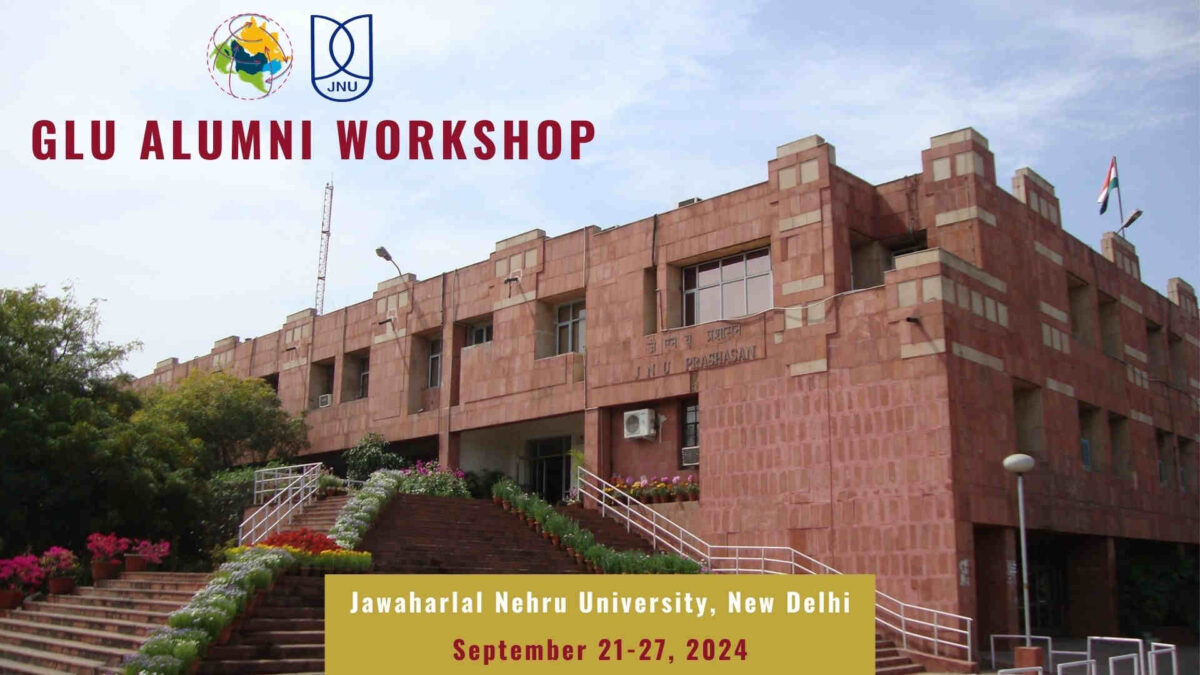
    This year, the conference will be 25th-27th September at the Jawaharlal Nehru University (JNU) in New Delhi, India.

    This event celebrates GLU’s global achievements and deepens discussions with academics, alumni, and trade union members.

    While planning the conference, GLU issued a call for papers titled “Globalisation and Transition to an Egalitarian World: Resistance and Alternatives”, and selected proposals that will be presented at the conference.

    Some of the main conference themes will be platform work, responsible global supply chains, and broader policy questions in response to today’s “world disorder”. The conference will also focus on labour regimes & policy, challenges of authoritarianism, global value systems, care chains, the solidarity economy, and climate justice.

    Alumni Workshop

    Global Labour University (GLU) is organising an Alumni Workshop for graduates from all GLU programmes. The workshop will provide a comprehensive reflection on the impact of just transition, gender equality, migration, and authoritarian regimes in the world of work. It will then present an analysis of trade union strategies in responding to these challenges.

    By learning from their varying experiences in different countries, the alumni will significantly broaden their knowledge on these subjects. The intention is that this will enhance their skills and strengthen their effectiveness in trade union work.

    To begin the workshop, alumni will start developing a case study based on their experiences in their home countries. This will initiate a broader discussion and knowledge sharing on the topics. Following this, the workshop programme will then combine the insights of distinguished experts and practitioners with the experiences of the alumni themselves.

    Visit the Global Labour University website here.

    Read more about GLI’s partnership with Global Labour University, on our Key Partners page.

    Global Labour University Logo

    Fionna McAndrew

    August 29, 2024
    Article, Homepage Post 3, Latest, Trade Unions
    GLU, India, trade unions

CONTACT

gli-uk@global-labour.net

Global Labour Institute
(GLI Network Ltd)
535 Royal Exchange
Manchester
M2 7EN
UK

OUR SITE

Home

About Us

Publications

Issues

Trade Union Education

GLI History Project

Latest

KEEP IN TOUCH

  • X
  • LinkedIn
  • Facebook

The GLI Network Limited is a limited company registered in England and Wales, company number 07378368

GLI Manchester is part of the GLI Network

Privacy Policy

Site created by greenh & hosted by Webarchitects Co-operative