
Skip to content

Global Labour Institute

  • About Us
    • Our Team
    • Contact Us
    • The Global Labour Institute Network
    • Key Partners
  • Publications
  • Issues
    • Informal Work
    • Gender and Equalities
    • Climate Crisis
  • Trade Union Education
    • GLI International Summer School
      • International Summer School 2016
      • International Summer School 2015
      • International Summer School 2014
      • International Summer School 2013
      • International Summer School 2012
  • The GLI History Project
  • Latest
  • Report – Understanding Informal Transport in Africa: Labour Impact Assessments as Tools to Improve Workers’ Conditions

    Report – Understanding Informal Transport in Africa: Labour Impact Assessments as Tools to Improve Workers’ Conditions

    Public transport, formal and informal, is a vital service relied upon by millions of people all over the world. It is strategically important in the economic and social life of cities and is central to cutting transport emissions. The sector is also a major employer globally creating millions of direct and indirect jobs.

    In many African cities, public transport reform projects are underway which have significant impacts on informal transport, the dominant form of public transport. Many people depend on it for their livelihoods, not just drivers or vehicle owners. These other workers are frequently overlooked when considering the impact of reforms on employment and the economy and rarely included in consultations and surveys undertaken by transport authorities.

    Transforming informal transport is central to the overall sustainable transport agenda. Overcoming structural problems and inequalities requires policies which address the inter-relationship between passenger services and working conditions for the millions of workers who rely on this sector for their livelihoods.

    GLI was commissioned by the Volvo Research and Educational Foundations (VREF) and the International Transport Workers’ Federation (ITF) to write a research paper exploring the potential of labour impact assessments as a means to enhance workers’ conditions in Africa’s informal transport sector. Read more about previous labour impact assessments undertaken by GLI here.
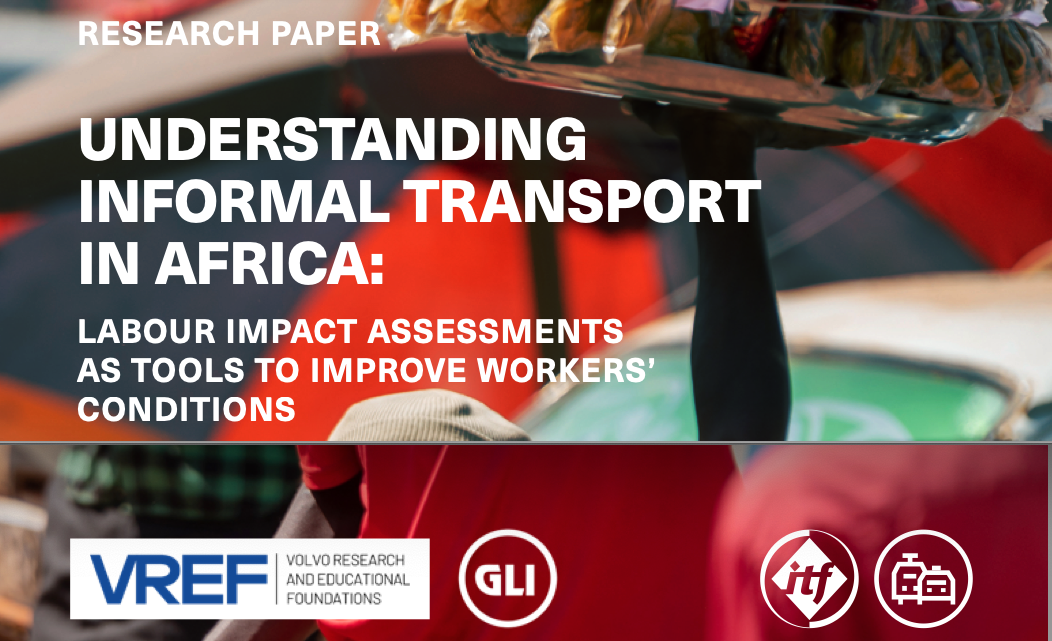
    The report ‘Understanding Informal Transport in Africa: Labour Impact Assessments as Tools to Improve Workers’ Conditions‘ explores the potential of labour impact assessments as a means to enhance workers’ conditions in Africa’s informal transport sector – and provides an in-depth conceptual framework to address both the policy and practical opportunities and challenges.

    The report details the use of participatory research methods; defining ‘transport worker’ to include all those directly dependent on informal transport for their livelihoods; building partnerships with local academic institutions; supporting constructive dialogue and negotiation between trade unions and transport authorities and most importantly, building participation by trade unions and workers’ associations representing informal transport workers.

    This report provides a detailed account of how the methodology has been implemented in different local contexts in Africa, the major findings and lessons learned, and provides an in-depth conceptual framework to address both the policy and practical opportunities and challenges.

    The paper was presented and discussed at an online VREF Research Forum titled ‘Unlocking better work conditions in the informal transport sector through labour impact assessments’ on 12th February at 1-2:30 PM GMT.
    Click here to watch the recording of the forum.

    Georgia

    January 21, 2025
    Homepage Post 2, Informal Work, Report
  • Technological Changes at Airports and the Impact on Workers

    Technological Changes at Airports and the Impact on Workers

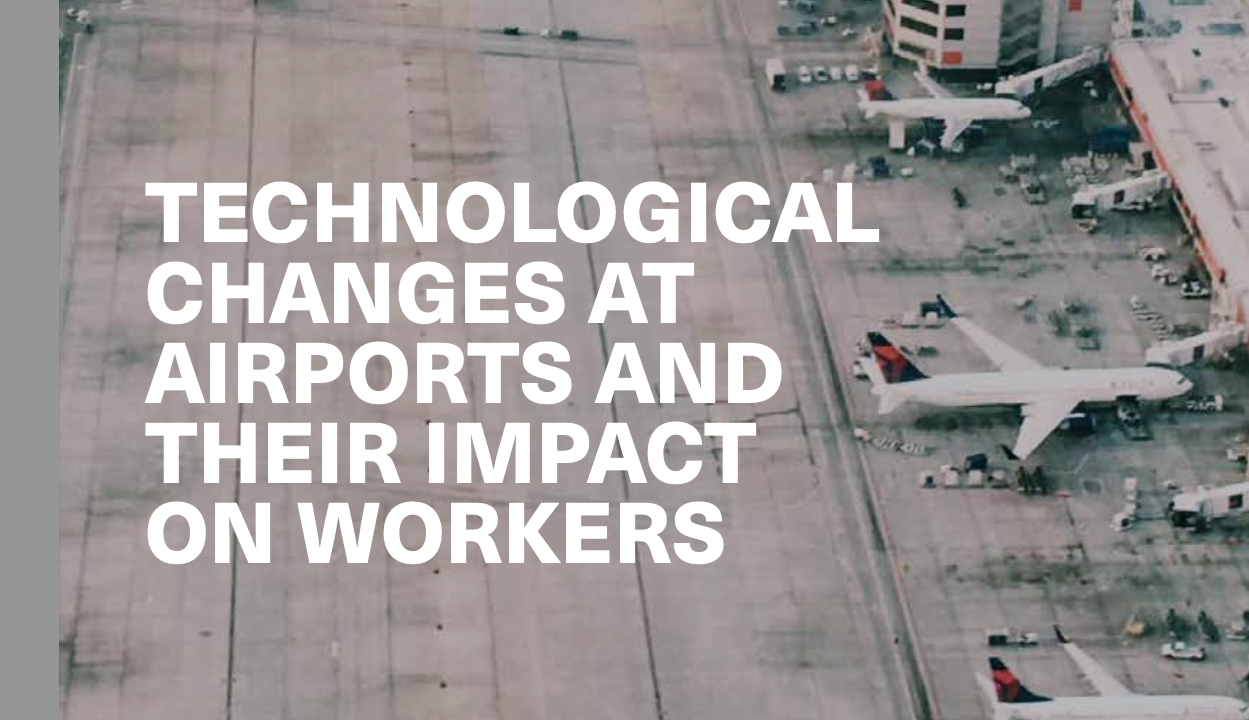
    Across the world airports are introducing new technologies aimed at increasing efficiency, reducing costs and supplementing worker shortages. The rate of change varies across airports – dependent on passenger numbers, airport size, regulatory pressures and the stakeholders involved. 

    Through in-depth interviews and focus group discussions at three airports and an online questionnaire survey to union representatives, this research set out to explore how technological change within airports is impacting workers’ rights and jobs.

    There is huge potential for these technologies to ease workload and improve occupational health and safety. However, technology tends to be mistakenly seen as a silver bullet and introduced without consideration of the potential negative impacts of technology.

    he existing challenges highlight the central importance of a collaborative approach to the introduction of new technology, including all key stakeholders within airports – particularly trade unions.

    It also highlights the importance of labour impact assessments, including equality impact and risk assessments before technology is introduced, commitments to job security, quality and skills development, equal access to quality technology for workers, standardisation across technology and the need for controls on monitoring and surveillance technologies and the collection and use of worker data.

    This research was commissioned from GLI by the International Transportworkers Federation (ITF)

    Click here to read this research report.

    Georgia

    January 20, 2025
    Homepage Post 3

CONTACT

gli-uk@global-labour.net

Global Labour Institute
(GLI Network Ltd)
535 Royal Exchange
Manchester
M2 7EN
UK

OUR SITE

Home

About Us

Publications

Issues

Trade Union Education

GLI History Project

Latest

KEEP IN TOUCH

  • X
  • LinkedIn
  • Facebook

The GLI Network Limited is a limited company registered in England and Wales, company number 07378368

GLI Manchester is part of the GLI Network

Privacy Policy

Site created by greenh & hosted by Webarchitects Co-operative