
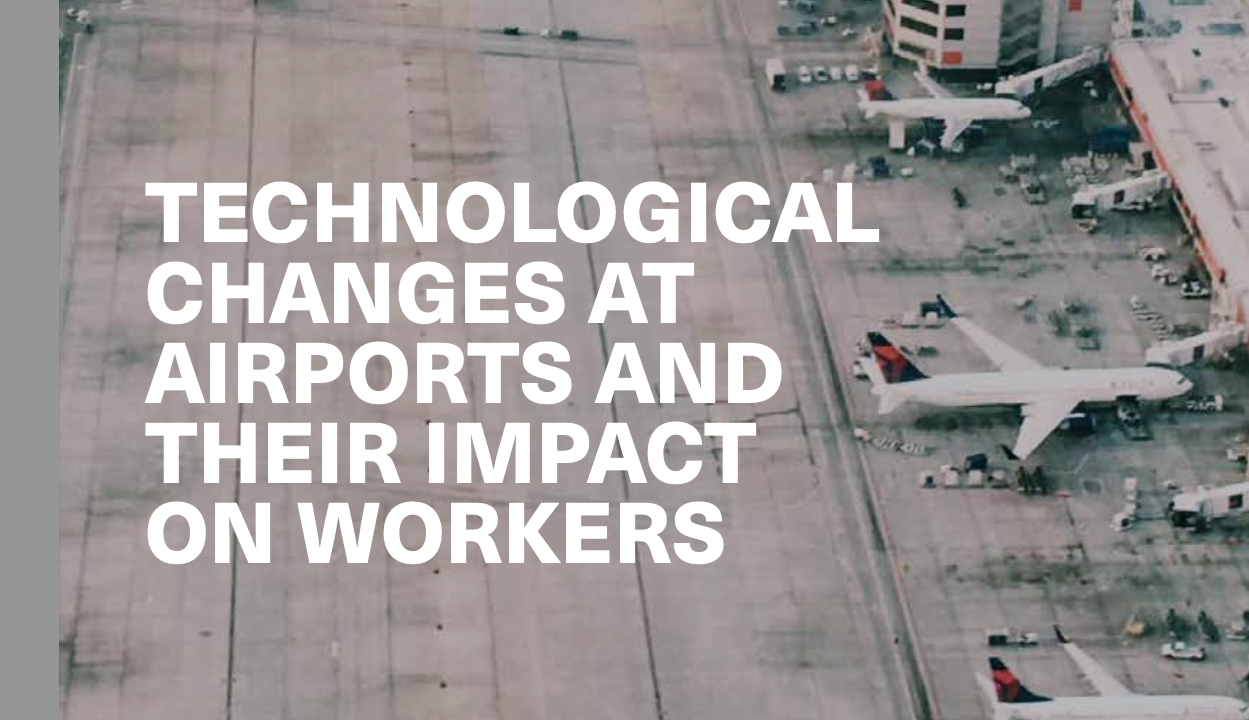
Across the world airports are introducing new technologies aimed at increasing efficiency, reducing costs and supplementing worker shortages. The rate of change varies across airports – dependent on passenger numbers, airport size, regulatory pressures and the stakeholders involved.
Through in-depth interviews and focus group discussions at three airports and an online questionnaire survey to union representatives, this research set out to explore how technological change within airports is impacting workers’ rights and jobs.
There is huge potential for these technologies to ease workload and improve occupational health and safety. However, technology tends to be mistakenly seen as a silver bullet and introduced without consideration of the potential negative impacts of technology.
he existing challenges highlight the central importance of a collaborative approach to the introduction of new technology, including all key stakeholders within airports – particularly trade unions.
It also highlights the importance of labour impact assessments, including equality impact and risk assessments before technology is introduced, commitments to job security, quality and skills development, equal access to quality technology for workers, standardisation across technology and the need for controls on monitoring and surveillance technologies and the collection and use of worker data.
This research was commissioned from GLI by the International Transportworkers Federation (ITF)