
Informal street vendors and market traders make huge economic and social contributions, but many workers major challenges at work, including insecurity, long working hours, poor working environments, violence and harassment, lack of affordable finance and low levels of representation.
In 2024, StreetNet International (SNI) – a global alliance of organisations of street vendors and informal economy workers – partnered with the Global Labour Institute (GLI) in Manchester to launch the ‘Barometer Project’ with the aim of understanding in greater detail the situation facing affiliated members and workers. Through the collection of data through surveys, focus groups and in-depth interviews, the project was launched with several objectives including:
- Gaining a detailed understanding of the characteristics, livelihoods and key issues faced by street vendors and market traders.
- Informing SNI on key thematic areas for exploration, particularly related to opportunities for the formalisation of informal employment (improved livelihoods & working conditions, protection from harassment & violence, freedom of association, the right to work without restrictions, access to social protection, a& recognition, engagement in collective bargaining & consultation with authorities).
- Building the capacity of SNI affiliates to monitor workers’ conditions and collect evidence to support engagement with national and international authorities and policymakers.
The project was based on a participatory research methodology – through the active engagement of trade unions and membership-based associations organising and representing workers in the informal economy and built on vendors’ and traders’ own experiences and knowledge. SNI affiliates were actively involved in the research process – two cities were chosen for piloting the project – Harare, Zimbabwe, working with Zimbabwe Chamber of Informal Economy Associations (ZCIEA) and Buenos Aires, Argentina, working with the Union de Trabajadores de la Economia Popular (UTEP).
The project findings were also used to support SNI’s participation in the 2025 International Labour Conference (ILC) general discussion on promoting transitions towards formality, during which SNI advocated for an inclusive and rights-based formalization.
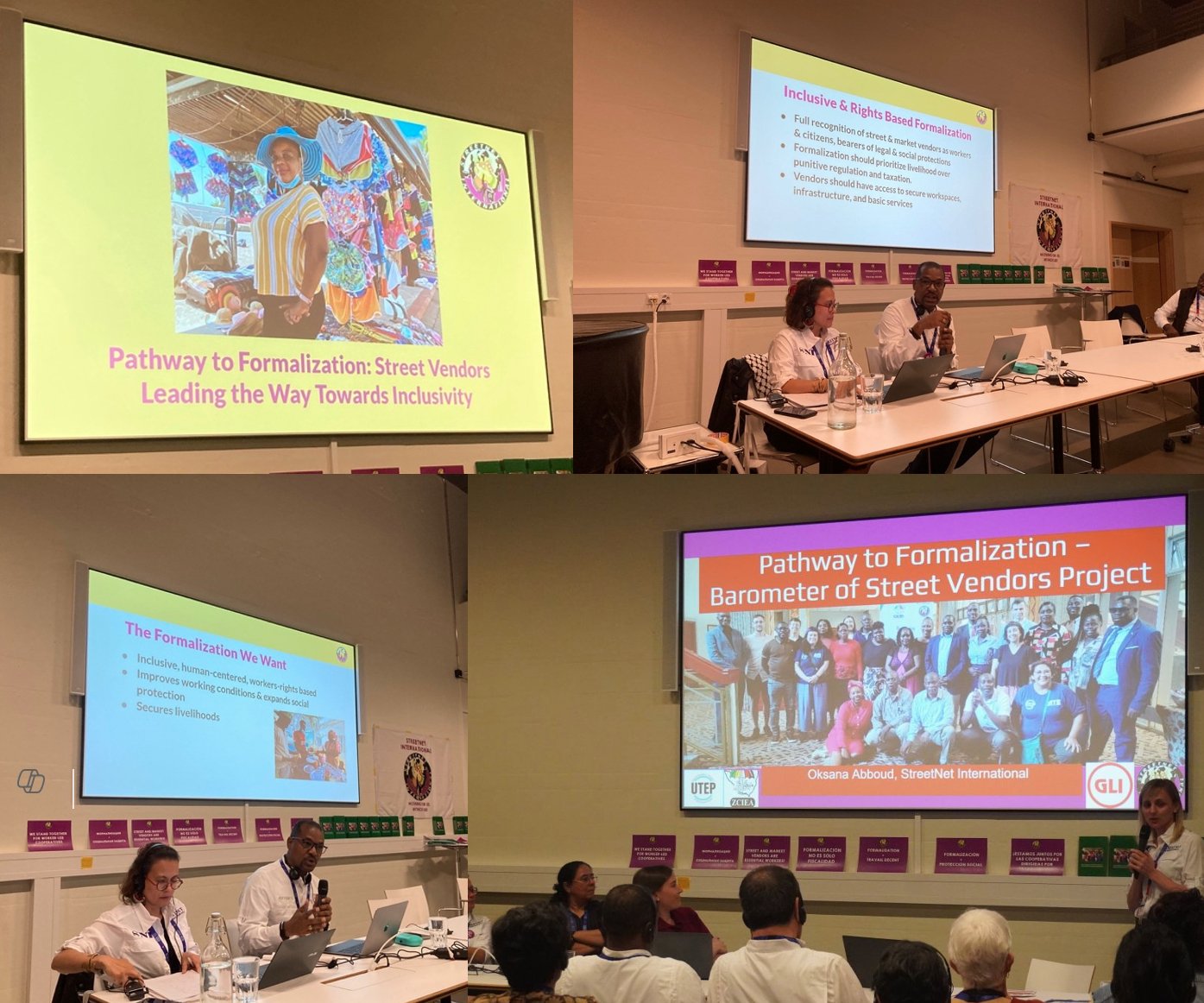
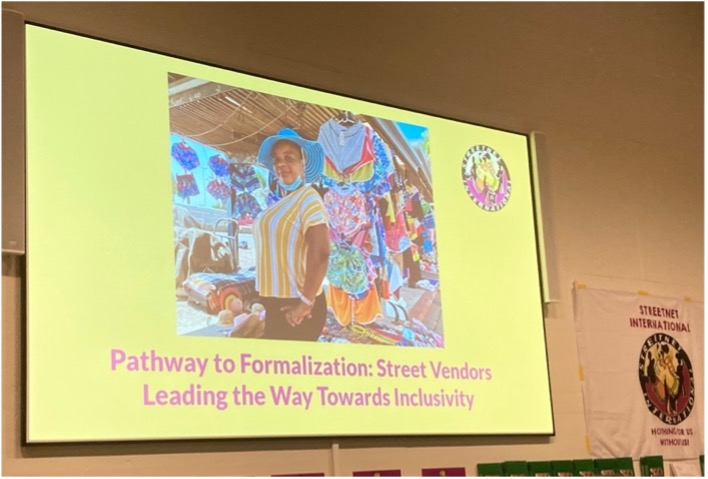
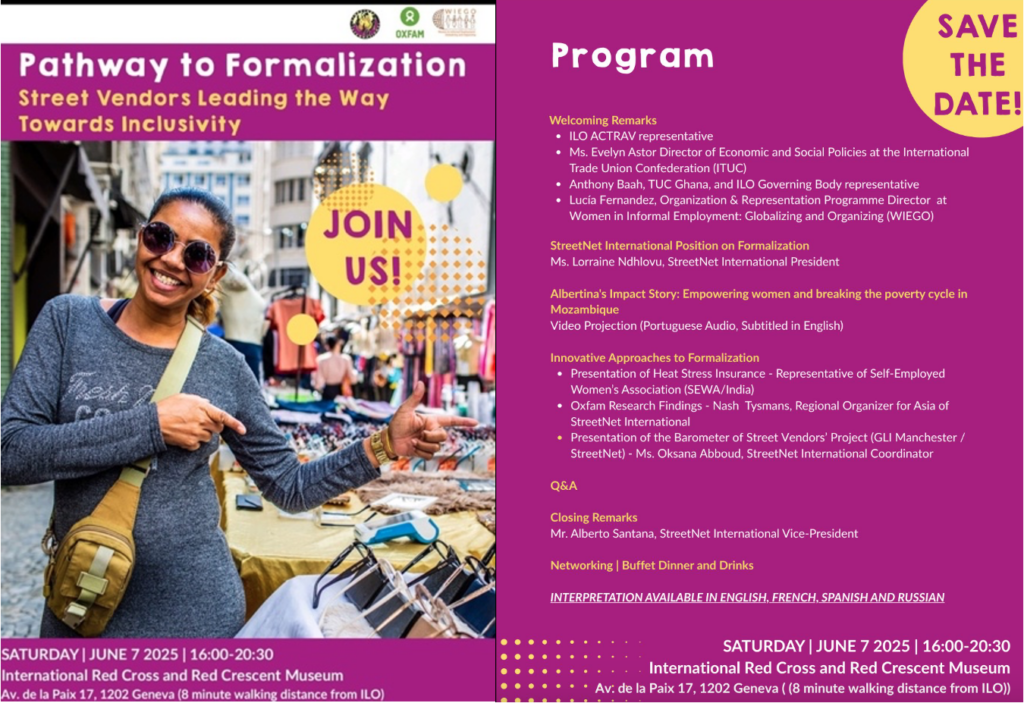
On 7 June, SNI also hosted a side event to the ILC: ‘Pathway to Formalization: Street Vendors Leading the Way Towards Inclusivity’
During the event, SNI laid out its vision for formalization – rooted in workers’ rights, dignity and the principles of the social and solidarity economy. It also provided the opportunity to share best practice and innovative research, including the key findings from the Barometer project.
[Image: SNI Formalisation Presentation Slide]
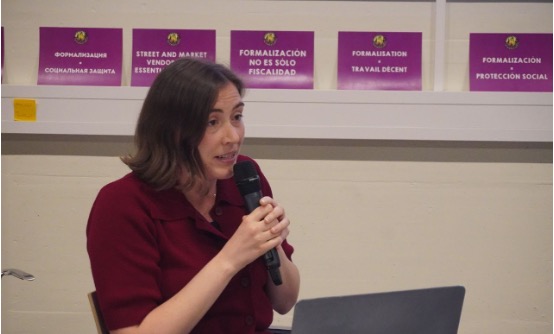
Early findings from the project were presented by Oksana Abboud (SNI International Coordinator) and Georgia Montague-Nelson (GLI Executive Director). Georgia praised the role of ZCIEA and UTEP in shaping the research programme, highlighting huge potential for replicating the methodology across other countries.
She also emphasised the value of a participatory approach and for workers and representative organisations to shape and lead worker-focused research. Too often, workers in the informal economy are excluded and ignored, but have valuable knowledge, experience and proposals and can lead the way in transforming their livelihoods and economies – “Nothing for us, without us”!
[Image: Georgia speaking at the SNI event]
The full country reports, and a cross-comparative report from the Barometer Project will be launched in the coming months.