
As cities across Africa move toward electrifying informal transport systems, a critical question emerges: how can this transition be both green and socially just?
The Global Labour Institute (GLI), the International Transport Workers’ Federation (ITF) and VREF – Volvo Research and Educational Foundations, in partnership with C40 Cities, are developing practical Labour Impact Assessment (LIA) training materials. These materials aim to help cities understand how major transport reforms — including electrification — may affect informal economy workers, and to ensure that the realities of workers’ livelihoods and their voices are integrated into transport planning and decision-making.
As part of this work, GLI Executive Director, Georgia Montague-Nelson, attended the Paratransit Electrification Africa Study Tour in Nairobi (23-27 February 2026), organised by C40 Cities, the Transformative Urban Mobility Initiative (TUMI), ZEBRA, Nairobi City County, and the United Nations Environment Programme (UNEP).
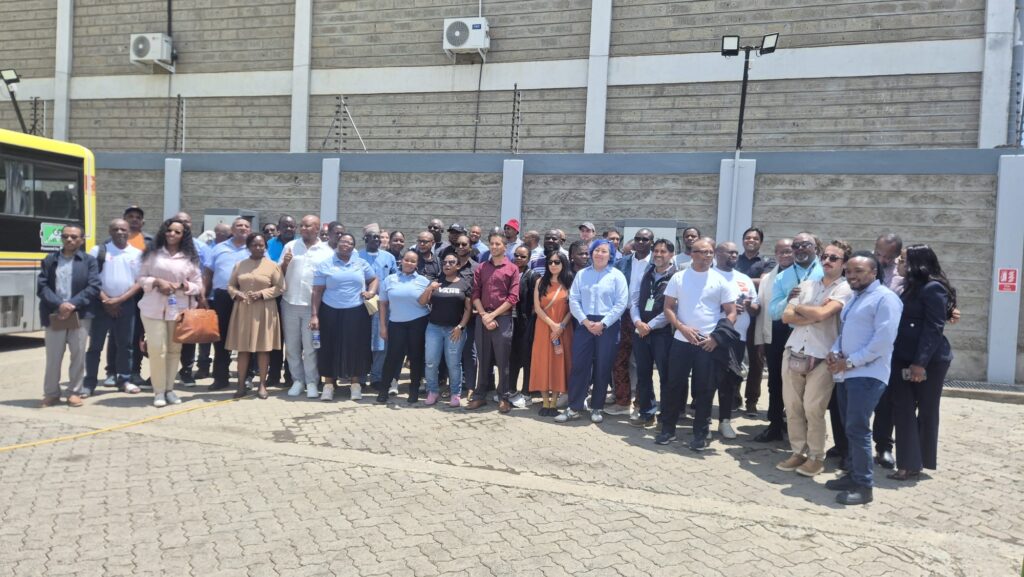
To participate in the Study Tour Georgia was joined by Stephenson Kisingu, ITF Africa Regional Union Building Coordinator (pictured) and Erick Manga, University of Nairobi.

The study tour brought together city and national government representatives from across Africa who are preparing for the electrification of informal transport systems. Discussions covered a wide range of topics, including national policy frameworks, city transition strategies, charging infrastructure models, grid capacity considerations, and gender mainstreaming in the transition.
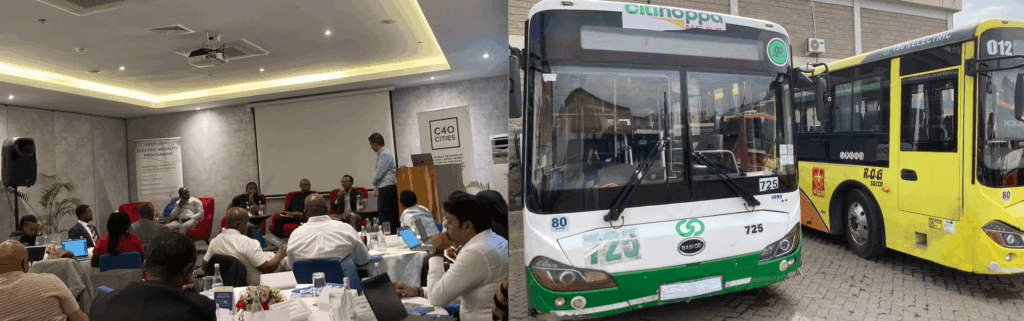
Participants also visited BasiGo and Roam, gaining first-hand insight into how electric buses, motorbikes and charging depots are being deployed within Kenya’s rapidly evolving e-mobility ecosystem.
Understanding the Labour Implications
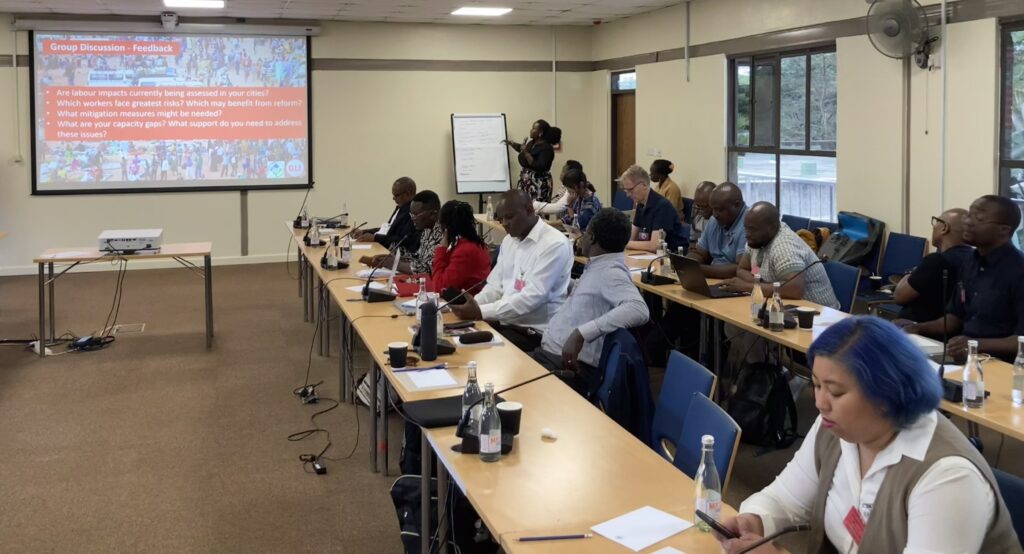
During the study tour, GLI led a workshop together with the ITF on the labour implications of electrifying informal transport. The session introduced the Labour Impact Assessment methodology, highlighted the critical role of trade unions and workers in shaping transition strategies, and invited participating authorities to conduct a “mini labour impact assessment” of their planned reforms.
Discussions explored both the risks and opportunities associated with electrification in informal transport. Key themes included:
- Potential job losses or changes to existing livelihoods
- The emergence of new occupations within the e-mobility sector
- Barriers for workers seeking to transition into new roles
- Limited access to training opportunities
- High reskilling costs
- The structural realities of informal employment
A central takeaway from the workshop was that electrification presents an opportunity for a broader paradigm shift. Beyond introducing new technologies, the transition could also improve working conditions, strengthen skills pathways, and enhance livelihoods across the sector. However, achieving this outcome requires stronger data and evidence on labour impacts to inform policy and planning. As one insight from the discussions captured clearly: “If you cannot measure it, you cannot manage it effectively.”
Embedding Labour Considerations from the Start
Electrifying informal transport is not only a technological transition — it represents a structural transformation that will affect thousands of livelihoods across African cities. Ensuring that reforms are both environmentally sustainable and socially equitable requires embedding labour considerations into transport planning from the earliest stages.
The Labour Impact Assessment training materials currently being developed will help cities anticipate labour implications, engage workers and unions, and design transition strategies that support both climate goals and decent work.
These materials will be further refined with partners over the coming months and are expected to be launched at the VREF Global Convening on Informal and Shared Mobility in Bangkok in October 2026.